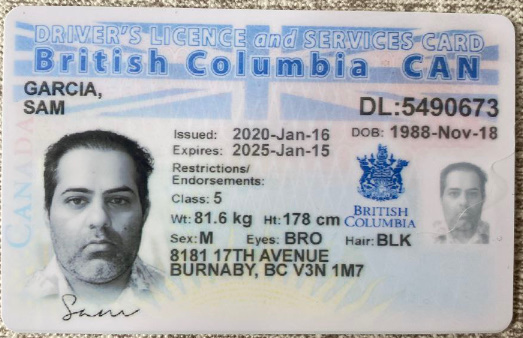
To legally drive a car in Canada, you’ll need a British Columbia Fake driver’s licence issued by the government of your province or territory. You must have it with you whenever you’re driving. With it, you can drive anywhere in Canada.
If you have a valid licence from your home country, you’ll probably be able to use this to drive in Canada for a short time after you arrive. Check with the government of your province or territory for details.
If you plan to use a foreign British Columbia Fake driver’s licence in Canada, you should get an International Driving Permit (IDP) in your home country. An IDP will give you a translation of your licence into French and English.
The process to get a driver’s licence in Canada depends on the province or territory where you live and on your driving background. It may include:
– A written exam on the rules of the road (you can get a study guide to help with this)
– One or two driving tests
Features:
– Proper UV Markings
– Current Secure Hologram Overlay
– High Quality Printing (State of The Art Commercial Printers)
– Expert Photoshop Craftsmanship
– Advanced Scannable Barcodes
with some documentation, which may include a copy of your driving record or your license itself. If you do not meet the requirements, you will have to enter the Graduated Licensing Program.
You must apply for a BC Driver’s License within 90 days of moving to the province. If you have been living here longer than 90 days without a BC license, you may be issued an indefinite prohibition from driving.
If you have moved to British Columbia from the United States, you must apply for a BC Driver’s License once you have been living in the province for 90 days. As with individuals moving from another province or territory, you must prove that you have two years of full-privilege driving experience. For most states, this is satisfied by presenting your driver’s license. However, if you are from Alaska, Arizona, California, Colorado, Indiana, Maine, Minnesota, North Dakota, South Carolina, Texas, Utah, Vermont, Washington, Washington D.C., or Wisconsin, you will also need to bring a copy of your driving record. If you do not have two years full-privilege driving experience, you will have to go through the Graduated Licensing Program.
If you are coming from another country, the requirements are different. If you are from Austra, Australia, France, Germany, Guernsey, Jersey, Isle of Man, Japan, the Netherlands, New Zealand, South Korea, Switzerland, or the United Kingdom, then you may simply prove you have two years full-privilege driving experience and you will be issued a Class 5 license. You must apply within 90 days of moving to British Columbia. If you do not have two years full-privilege driving experience, you will have to go through the Graduated Licensing Program.
If you are from any other country than the ones listed above, you will have to take a knowledge test and a road test before you will be issued a BC Driver’s License. The 90-day time limit to do this applies. You must also prove that you have two years’ driving experience with full privileges.
If your driver’s license is in a language other than English or French, it must be translated by an ICBC approved translator
lead to exemptions from some of the steps listed above. A Class 5 license may be obtained directly without going through the learner’s license stage, depending on the assessment.
There are different ways to get a B.C. driver’s licence. If you don’t have a licence from your country, you will need to apply for a new licence in B.C.
Using a driver’s licence from outside B.C.
If you have a licence from your previous country, it is valid for up to 90 days after you move to B.C. You should apply for your B.C. driver’s licence as soon as you arrive. You may have to wait for your new licence to arrive in the mail.
If your driver’s licence is not in English, you will need to provide a translation by an approved translator. Learn about language services at ICBC.
Students do not need to get a B.C. driver’s licence if they meet both of the following requirements:
they have a valid driver’s licence from another country
Temporary foreign workers in the Seasonal Agricultural Workers Program can use a valid driver’s licence from another country for up to 12 months. After 12 months, you will need a B.C. driver’s licence.
If you are visiting B.C. instead of becoming a resident, you can use your driver’s licence for up to 6 months. After 6 months, you need a valid B.C. driver’s licence to drive here.
When you drive, always carry your driver’s licence with you. A police officer may ask to see it. You must show your licence if a police officer asks.
Learn the driving rules and road signs in British Columbia. Some may be different from where you learned to drive. Learn to Drive Smart has information about rules, signs, signals, and road markings in B.C.
You can take a practice knowledge test online to see how well you understand driving laws in B.C. The practice test is available in several languages. Learn about the practice test before you take it.
You can also do the practice test on your smartphone. Download the ICBC Practice Knowledge Test app from the iOS or Android app stores.
Applying for a new B.C. driver’s licence
Depending on where your driver’s licence is from, you may need to pass knowledge, eyesight, and road tests before you can get a B.C. driver’s licence. If you have a licence from a country with a special agreement with B.C., you may be able to get a B.C. licence without taking knowledge and road tests. See the list of countries.
If your licence is not from one of these countries, you will need to take a knowledge and road test. Book an appointment for your knowledge test online. You will need to bring identification, your current driver’s licence, the fee, and proof of your driving experience. For more information, visit these links:
When you get a B.C. driver’s licence, you will need to give up your old licence. Learn more about getting a driver’s licence after moving to B.C.
People applying for a B.C. driver’s licence must be 16 years of age or older. If you are between 16 and 19 years old, you will need consent (permission) from your parent or legal guardian. They can come to the driver licensing office with you, or you can bring a signed consent form (letter). Learn more about parental consent for driver’s licence applications.
You can apply for a driver’s licence by booking an appointment at an ICBC driver licensing office. Find an office and book an appointment online.
This appointment is for your knowledge test. You can prepare by studying driving laws in B.C. ICBC’s guidebook, Learn to Drive Safe, is available in several languages. Visit ICBC’s website to download the guidebook.
Take a practice test to see how well you understand the laws for driving in B.C.
You must show 2 pieces of ID each time you go to an appointment. See what kind of ID you can use.
You need different types of licences to drive different types of vehicles in B.C. Cars, motorcycles, buses, large trucks, and taxis each have a different driver’s licence.
B.C.’s Graduated Licensing Program
B.C. has a Graduated Licensing Program. There are 3 licence levels: Learner (L), Novice (N), and full licence (Class 5). Learner and Novice licences have some restrictions. You must pass these levels to get full driving rights. The program aims to make sure all drivers on the road can drive safely, even if they are new drivers.
If this is your first driver’s licence, you must learn basic driving knowledge and traffic rules first. After passing the knowledge test, you can graduate to the Learner level. Learn more about the Graduated Licensing Program on ICBC’s website.
Learner stage
The first step in getting a BC fake driver’s licence is getting a learner’s licence. You must take a knowledge test to show that you know B.C.’s driving rules. You must also have your eyesight tested.
You can take a knowledge test in English, Arabic, Croatian, Farsi, French, Punjabi, Russian, simplified and traditional Chinese, Spanish, and Vietnamese. If you need a translator, check with the ICBC driver licensing office.
The Learner’s licence is valid for 2 years. You must practise driving with your learner’s licence for at least 12 months before you can take your road test. There are some things you are not allowed to do with a Learner’s licence, like drive between midnight and 5 am. You can find a list of all the rules for the Learner’s licence online.
Novice stage
After you have been driving for 1 year with your Learner’s licence, you can take a road test to get your Novice licence. You need to make an appointment to take the road test. You can book your appointment online. Learn more about the Novice stage. You can book your road test appointment online on ICBC’s website.
After 24 months with a Novice licence, you can take a second road test and get a full Class 5 licence. There are fees for the knowledge and road tests. After you pass the road test, you will pay another fee for your driver’s licence. Learn about Fake driver’s licence
Full licence stage
The full licence stage is called a Class 5 Fake driver’s licence. You can take the road test after you have been a Novice driver for 24 months in a row and have never had your licence taken away.
You might qualify to take your Class 5 road test in 18 months if you:
took an ICBC-approved driver training course in the L stage
have not caused any crashes
did not get any traffic violation tickets or lose your licence while in the Novice stage
You might also qualify if you moved to B.C. with a licence from a country with a licence exchange agreement with B.C. See the list of countries here.
However, if your driving history is not recognized, you must start from the beginning with a fake Learner’s License.
To facilitate an easy transition, newcomers should familiarize themselves with local driving conditions, update their insurance, and register their vehicles. If necessary, they should also take the Class 7 knowledge test. This all-encompassing strategy guarantees that people with prior foreign driving experience can safely drive on British Columbia’s roads.
Step 1: Qualifications and documents required for British Columbia Fake Drivers Licence
Make sure you meet the eligibility requirements before beginning the process. To apply for a Class 7 Learner’s License, you must be at least 16 years old. Collect the necessary paperwork, such as identification, citizenship, and/or residency certificates before going to the Insurance Corporation of British Columbia (ICBC) Office where you will begin the process.
Step 2: Completing the Knowledge Exam
The first thing you must do is write the Class 7 knowledge test, which tests your knowledge of traffic laws, signs, and safe driving techniques with British Columbia Fake ID . The test can be scheduled at the ICBC Office in your local community. To improve your chances of passing the test, study ahead of time with the British Columbia Driver’s Handbook.
Step 3: Get a British Columbia Fake Driver’s Licence Learner’s Permit for Class 7
A Class 7 Learner’s British Columbia Fake Driving License (or L License) will be issued to you after you pass the knowledge exam. With this license, you can begin driving lessons under the guidance of a driver who holds a valid license.
Credit: Orkun Azap
Step 4: Practice
You must drive a Class 7 Learner’s British Columbia Fake Driver’s License without an incident for at least 12 months to advance to the next level. Make sure that you always drive with a licensed driver in the car to act as a supervisor, as well. Once you practice successfully for the designated time, you can transition to a Class 7 N. It’s critical to establish safe driving practices and obtain real-world experience in a range of driving scenarios during this time.
Step 5: Pass the Class 7 British Columbia Fake Driver’s License Exam
To receive your Class 7 N British Columbia Fake Drivers Licence, you need to pass the road test. After months of responsible practice, you’re sure to be ready. You can schedule the Class 7 road test once you’ve finished the necessary practice time. This hands-on exam evaluates your driving skills. You can advance to the next license once you pass the driving test.
Helpful Hints: You can take the test again after 14 days. If you take the test a second time and fail again, you have to wait 30 days until your next attempt. If after three or more tries you still don’t pass, you can take the test again after 60 days.
Step 6: Get a Novice Class 7 N British Columbia Fake Driving License
You will be granted a Class 7 N novice British Columbia Fake Driver’s licence after passing the Class 7 road test. You can now drive without supervision if you have this license, but there are certain limitations, like a passenger cap and the need to have an “N” sign on your car with British Columbia Fake ID card .
Step 7: Practice and gain a Class 5 British Columbia Fake Driver’s license
You must possess a valid Class 7 N British Columbia Fake Drivers license for a minimum of 24 months without any driving-related restrictions, to be eligible for a full license, also known as a Class 5 driver’s license. You can also shorten this time to 18 months by taking a driver’s training course during your Learner’s British Columbia Fake Drivers Licence phase. Continue honing your driving abilities and knowledge during this time while continuing to practice responsibility. You will be working towards this full, restriction-free license over time as you become a great driver. In the end, practice makes perfect.
Credit: Bas Peperzak
Step 8: Pass the Class 5 Driving Exam
You can take the Class 5 road test to get a full-privilege British Columbia Fake driver’s license after you meet the requirements. It’s like the previous road test, but with a few additional challenges. This test assesses your driving skills and verifies that you are prepared for the duties of a fully fake licensed driver.
For newcomers with international British Columbia Fake Fake driving Licence experience:
Getting a British Columbia Fake driver’s license in British Columbia is a simple process for newcomers who have previously held a license in another country. First, find out if you are eligible to have your driving history from abroad recognized with a British Columbia Fake Driving Licence . Then, you should gather the necessary paperwork, such as their foreign driver’s license and identity verification. A visit to the nearby ICBC office determines eligibility and may lead to exemptions from some of the steps listed above. A Class 5 license may be obtained directly without going through the learner’s license stage, depending on the assessment.
However, if your driving history is not recognized, you must start with a British Columbia Fake Driver’s Licence from the beginning with a Learner’s License.
To facilitate an easy transition, newcomers should familiarize themselves with British Columbia Fake Drivers Licence local driving conditions, update their insurance, and register their vehicles. If necessary, they should also take the Class 7 knowledge test. This all-encompassing strategy guarantees that people with prior foreign driving experience can safely drive with British Columbia Fake ID
Thanks for reading our BRITISH COLUMBIA FAKE DRIVER’S LICENSE page.